Tuesday, December 18, 2012

Pashtu First Grader

I feel like a first grader again.  My handwriting is bad, I can't tell time, and I am still learning the days of the week.  Basic addition and subtraction is a chore and numbers just don't make sense.  On the plus side we seemed to have skipped over kindergarten stuff and are pushing right along to second grade level Pashto; grammar and vocabulary.  The basic sentences are starting too.

Today we tried to teach our instructor the difference between hail, hill, heel, and hell.  Because he's Pashto he can't hear the difference in the words (just like I can't hear the difference on some of the unknown Pashto sounds they have).  Since we were learning the word "hill" in Pashto we heard this all day (forgive my language), "what the hell" when he wanted us to say the Pashto word. 

One thing I have noticed is that Pashto burns up all my creative energy (hence no posts in a week).  Apparently trying to form sentences in Pashto uses up the same side of the brain as trying to put together English ones.  And according to Joy I am sleep talking in Pashto now.  That's how you know it's started.


Wednesday, December 12, 2012

Day 3

Pashtu alphabet memorized.  44 letters each morphing into different shapes depending on where they are in the word.  Once you get the logic though it's not too bad.  I judge my Pashtu handwriting at about the 1st or 2nd grade level.  So now I can sound words out I just don't know what they mean.

We are teaching our Afghan instructor American idioms (though he knows most already).  Today was "cook the books" and "touchy feely."  The first one was easy to explain but the second one was little harder to clear up...

Monday, December 10, 2012

Pashtu Day One

Started language school today.  And the first thing we did was set up or newly issued government ipods.  Never thought Uncle Sam would spring for something so hip and modern as an Apple product. 

It looks like flashcards are a thing of the past.  This language app we downloaded on the ipod uses some kind of specialized algorithm to track your practices and cycle your vocab around.  Pretty cool, but I'll probably need some real flashcards at some point. 

Our instructor right now (will change later) is 26.  I asked him what his father did and he said he is a retired Afghan General.  He retired after he was almost killed by a suicide bomber.  The deployment is starting to get real. 
 

Friday, December 7, 2012

Wing It

When Ernest Shackleton was recruiting men for his expedition to the south pole in the early 1900s he put this add in the paper:

"Men Wanted: For hazardous journey. Small wages, bitter cold, long months of complete darkness, constant danger, safe return doubtful. Honour and recognition in case of success."

His recruiting effort, by design, brought in the right kind of men for what would prove to be a historic expedition across the south pole. 

After a great presentation on capacity building in Afghanistan I asked our last speaker how he would spend his first thirty days in country if he went to my district.  He looked at me kind of funny and I could tell what was coming next.  So I finished his thought out loud, "Just wing it then, got it."  50 hours of discussion on Afghanistan provided by three star generals, retired ambassadors, premier COIN thinkers, and a few daring adventurers and my best conclusion is to wing it.  That's how complex the problem is.  It reminded of Shackleton's quote.  There's a lot of work to do, glad I get to be a part of it. 

Wednesday, December 5, 2012

Military Academia, how it's different from regular college

As part of the AFPAK Hands program we go though a week of counter-insurgency (COIN) training in the classroom.  As a young Captain this is pretty cool because we have been on the campus of the National Defense University (NDU) on Ft McNair in downtown DC.  Other than the long commute and short walk through ghetto, the campus is a cool spot.  NDU is one of the militaries' higher level professional education centers.  In other words there are lots of Generals and Colonels running around getting more masters degrees.  Thankfully, we are in civilian clothes so we can hide amongst the other bureaucrats.


The AFPAK program has "rented" some space and intellectual talent from NDU.  Some of the highlights have been briefings from a retired 3-star General and a retired US Ambassador (by the way that's a first in my career, having a General come brief me...).  We also had some great geopolitical discussions with a prominent COIN author who advises senior DOD officials.  As I sit through these discussions I couldn't help but think about my college academic experiences and how different this type of setting is compared to my undergrad experience.  Here are the big differences.

1. Many lecturers in military academia have been shot at.  This adds a different level of "real world application" to academic concepts.  My civilian profs focused on the theoretical, these guys/gals focus on the practical.  It's a dimension to learning that I would not have appreciated as a 19-year old kid.  Speaking of kids...

2. The military audience is older and smaller.  My first political science class had 300 people in it.  I don't recall learning anything in the class.  Most of the 300 people in the class were 18.  In my class today the median age is 40 and there 20 of us.  The last four days of lecture/discussion have covered more geopolitical ground than I got in dozens of credits worth of undergrad work.  Small groups led by experienced instructors equals a great learning environment.

3. You pay more attention when you know you'll need the information.  Part of my academic problem in college was a lack of motivation.  If the topic didn't seem interesting or applicable I didn't give it much spare brain space.  This block of military learning has kept me engaged because I know I am going to need it.  And do 18 year olds really know what they are going to do with their lives enough to know what information they need for the trip?  I know I didn't have clue. 

Comments?

Friday, November 30, 2012

1000

Thanks to my mom, my mother-in-law, and my reluctant, proof-reading wife for pushing the blog to over 1000 views. 

Just kidding about my wife, she's my biggest fan.

If I had a dime for every car I junked I'd have 20 cents

I have gotten good at being the last owner of cars.  The car doc came back with a grim prognosis for the Pathfinder.  It will soon make it's way to "car heaven."  The "end of the road."  The "final chapter."  Etc.

The first car I junked was some kind of British Ford that I can't recall.  It was a four door and huge for British roads.  One day I had to drop the Group Commander and the Group Command Chief at the airport in south London.  The Commander was my bosses' boss.  A big deal (incidentally, I saw him this week at the Pentagon but didn't say hi due to the story that follows...).  It happened to be the hottest day of the year in England.  And the same day my a/c went out...  As a young Lieutenant I engaged in the most serious, deep-thoughted, professional, conversation I had ever had to distract my poor boss from the sweltering heat.  The Chief, at the start, gave up and fell asleep--or passed out--in the back seat.  Thankfully we arrived at the airport on time, despite a miserable delay in traffic cooking in the heat.  After dropping them off the a/c magically came back on and I turned the car for home.  30 miles south of the house the engine exploded and I pulled over with a huge smile on my face.  "Thank goodness I got them down there on time..." I thought.  That's how my first car made it to the junkyard. 

The second car was another Ford.  A Mondeo I think.  British car.  I bought it for 1,000 bucks.  The license plate kept falling off the back so I duct taped it.  I would have to periodically reapply tape, no big deal.  This car actually worked ok.  Unfortunatly the British are extremely strict with vehicle inspections and the duct taped plates, among other small problems, just wasn't going to fly on Her Majesty's royal roads.  So this one got junked too.

The third car was another Ford (maybe I should I try another company....).  I bought the Taurus from my in-laws.  It had low miles and ran great (right up until it didn't...).  A certain unnamed driver in my household, who wasn't me and we don't have kids, did some significant "redecorating" to the rear passenger door.  In fairness DC driving is brutal so it wasn't unexpected.  But, despite the cosmetics, we planned to keep this car for a long time.  One day, the same driver who "redecorated" the door, was driving along a bridge in DC and the freeze plugs gave out.  The engine was shot.  Instead of junking this car our pastor suggested we give it to a college kid who put in a new engine for himself.  So I guess technically I wasn't the last owner on this one. 

And now car number four, my Pathfinder.  No great story with this one.  It's just old and too expensive to repair. 

While I don't enjoy driving cheap cars we have made the sacrifice so our "redecorating" driver can get some serious higher education.  And all the trips to the junkyard have been worth it to see her go to school. 

What "junkyard" tales do you have?

Thursday, November 29, 2012

Takeways from Steve Coll's Ghost Wars

Just finished Ghost Wars by Steve Coll.  The book covers the wars in Afghanistan from 1980 to 2001.  And those Pullitzer prize guys are pretty smart because this was a good book.  If you are looking for an in depth summary of the wars this is a good book.  If you don't have 6 weeks to plow through it the "can't-do-the-book-justice" highlights are below.

The big players in Afghanistsan in the 80s were the USSR, the Pakistanis, Americans, and Saudis.  Here's a short summary of the geopolitics in the 80s:

-The Soviets wanted to both prop up the communist government in AFG and expand their influence in the oil-rich Middle East.  The USSR is a land power and like all land powers it is highly insecure about it's borders.  So the buffer states are key pieces of terrain for them. 

-Pakistan didn't want the Soviets so close and it needed resources to fight India in Kashmir.

-The US just wanted to kill Soviets.

-The Saudi wanted to expand their influence in the Islamic world.  So they sent money and fighters and built religious madrasas in the region. 

After the Soviet invasion, Pakistan, the US, and the Saudi interest coaleseced into a loose "alliance" that supported mujahadeen factions.  This is were it gets complicated.   Pakistan picked mujadeen commanders they thought they could control in the interests of Pakistan.  US policy, in retrospect, naively allowed Pakistan to divvy out support to the commanders.  This prevented some of the more "moderate" commanders from gaining significant power in the conflict.  The Saudis poured money and volunteers into the fight as well.  Many of the madrasas supported by the Saudis began to radiclize based on teachings of a few key Islamic scholars of the day.  This is when a wealthy young sheik named Osama Bin-Laden (UBL) entered the fray.  The result was a guerrilla war fought by a shifting array of factions that eventually expelled the Soviets.

But when the Soviets left the fighting didn't stop.  After the withdrawal the US simply lost interest in the region.  Pakistan, however, was still keenly interested in placing a "pro-Pakistan" government in place.  To that end it pushed various mujahadeen commanders to continue fighting for power.  The war intensified.  Eventually Pakistan funded an extreme Islamist group known as the Taliban who successfully controlled several major cities.  UBL tapped into this new rising entity and quickly established his organization, Al Qaeda, as a solid Taliban ally in the ongoing war (several mujahadeen commanders continued to fight throughout the early 2000s).  Of course UBL had bigger aspirations and used the resources and safe haven he had built in Afghanistan to eventually launch 9/11.

Just before September 11, 2001 Al Qaeda used a suicide bomber disguised as a reporter to kill a prominent mujahadeen commander named Massoud.  Massoud was ardently anti-Taliban and perhaps Afghanistan's last hope for unified "moderate" government.  When Hamid Karzai, then a small anti-Taliban leader, heard of Massoud's death his first words were, "What an unlucky country."  Indeed.


Tuesday, November 27, 2012

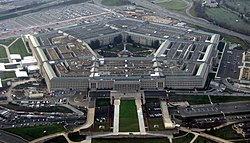
4 Ways to Survive Pentagon Culture Shock

                                The Pentagon January 2008.jpg

 
I went into the Pentagon for the first time yesterday.  Like going to another country, there was some culture shock.  Here's some Pentagon survival tips from one traveler to another. 

1 - Call everyone "sir" or "ma'am" because they probably are.  I saw more Generals in my first two hours at the Pentagon than I have seen in my whole career.  A four star here a three star there.  No big deal.

2 - Take a map and hire a river guide.   You wouldn't go on an expedition up the Amazon river without a river guide.  That place is huge and confusing.

3 - Be ready for less personal space.  The Pentagon is like a crowded third world country.  There's people everywhere.  In the rest of the Air Force a  "full bird" Colonel might have his own office and even a secretary.  In the Pentagon they cram four or five together around a couple of tiny desks and make them all share a phone.

4 - If you see a young Captain walking around be sure to say hello.  Because the only Captain in the Pentagon is probably me...

Sunday, November 25, 2012

They took my blackberry!

In DC mid-level bureaucrats can be easily identified by their furious typing on government issued Blackberries.  I proudly displayed my DC bureaucratic status symbol until I had to give up the phone two months ago when I went on the road.  Now I am back in DC waiting for my next "job" to start.   

Without my government cell phone or significant job responsibilities I've had a lot of mental down time.  This is much to the chagrin of my wife who is still fully engrossed in PHD school and has to field questions like "hey what do you think about current Pakistani policy in the Pashtun tribal areas of Waziristan?"  Or "did you know the Ford Shelby Mustang has 663 horsepower, comes in dark blue, and is only $65,000 bran new?"  To which she patiently responds, "That's great honey and when are you starting your new job again?"  So I've come up with a few guidlines for family survial of "transition" down time.

- Use the slow time to think about strategic life decisions.  This can vary from family to family, but for me it's questions like "where do we want to live when we retire?" 

- Read a good book (or two...).  My views on reading are already laid out here.  Downtime is great for this.

- Clean your house.  I haven't been too serious about this one but my intentions are good...

- Try a new restraurant.  Again, good intentions, but no results on this one. 

- Collect the lessons learned from your previous job and make plans for applying those at your new job.  Every transition is an opportunity to start over and improve on your previous success (or learn from failure!). 

- Explore your city.  Since my wife is in school and I don't have a job, I drop her off and then go find something to do until she is done.  The American History Museum in downtown DC got a few visits from me when we were doing this.

- Relax.  You'll have plenty of stress later to make up for it...

Transitions can be tough but if you find ways to channel your mental (or in my case restless) energy you can benefit from the downtime.  Here's to the future.

How do you spend your transition downtime?

Tuesday, November 20, 2012

DC made me a terrible driver

The problem with Washington DC is that there is traffic everywhere all the time.  We have been stuck in a miles of bumper-to-bumper traffic at 2 am before.  Consequently I have become a terrible driver.  I used to respect speed limits and stop signs.  I don't anymore.  There was a time when I thought tailgating was dangerous.  And while the physics hasn't changed I sure have (the guy going 55 in the left lane this morning found that out today...).

Not only has DC traffic eroded my otherwise pleasant driving bent, the military has now sent me to two aggressive driving courses.  The coolest driving technique so far (besides the j-turn of course!) is "two foot driving."  I don't mean "two foot" as in 24 inches but as in right leg and left leg.  You put your right foot on the gas, accelerate to speed and then put your left foot on the brake to modulate your distance from the other car.  Works great for fast convoys in a combat zone...and for tailgating in DC...  I can just hear my dad in the background talking about how hard that is on the brakes.  And don't worry mom, I don't do it much!

There is one ray of hope in this terrible driving scenario.  Our Honda only has four cylinders and the Nissan literally has parts rattle off when it gets over 65 mph.

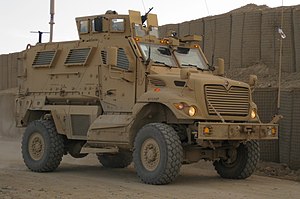
All this driving training had me looking at sports cars online this weekend.  Assuming funding was unlimted I would go with the Mustang Shelby.  But I guess I'll have to settle for an MRAP (photo below) until then.  It's basically an armored dump truck chassis with a weapon mount on top.  While the sun roofs on both my cars could be used as a weapon mounts I haven't rigged them up for DC interstate traffic yet. 


What's your ride of choice?

Sunday, November 18, 2012

Maximize Your Personal Growth Part 2

 "Not all readers are leaders, but all leaders are readers." -Harry Truman

There are two inputs that determine your personal growth.  Input #1 is present circumstance and input #2 is reading. 

My first commander got me into reading.  I was a freshly minted Second Lieutenant at my first base in England, and I was so new I couldn't find my butt with both hands.  He called me into his office, an intimidating thing at the time, and tossed me a thick book on leadership.  Inside he wrote "Welcome to the team and your 'continuing' education.  I look forward to watching you come into your own over the next year."  Thanks to his mentorship I have been a serious reader ever since that meeting.  Here's how you can get serious about reading:

- Start with topics you are interested in learning about.  For me topics are military or finance related (in fact I don't stray far from those two...).  Whatever you pick it would be useful to do at least some reading related to your industry.   Leadership reading is a great place to start if you can't think of anything else.  John Maxwell's The 21 Irrefutable Laws of Leadership: Follow Them and People Will Follow You is a quick read to get you in the grove.  Marriage and family are also good starting topics.

- Reading ground rule: fiction books don't count.  Most fiction is written for entertainment, not growth.  As cool as Harry Potter novels are, they won't help you do your job better or be a better parent (unless you are reading them as bed time stories I guess...) or a better spouse.  Non-fiction is the category of choice for serious growth. 

- So you have your topic, how do you narrow it down to a specfic book? You can start by asking a friend or a mentor if they recommend any books or authors.  If you stay in a topic long enough your favorite authors will reference other authors and that helps regenerate your reading lists.  The point is to start reading something worthwhile as soon as possible. 

- Don't get bogged down.  If you pick something up and you just don't like it, toss it aside and try something else.  There is no law against unfinished reading.  Sometimes you get everything you need from a book in the first few chapters, and it's not worth reading the rest.  The goal of a good reading program is to continually consume worthwhile content. 

- Don't neglect biographies and autobiographies.  I try to read one or two per year.  Bios are good for getting perspectives on current events and brushing up on your history.  A biography should remind you that "there is nothing new under the sun."

- How much should you read?  The general consensus seems to be one non-fiction book a month.  That's 10 or 12 more books in a year than your peers are reading.  For the truly committed, cut out an hour of TV per day and you can cover much more reading ground.

- Useful reading gear for your electronic warfare suite: electronic reading devices. I do all my reading on an "old" Kindle.  Yes, the books are more expensive on Amazon than if you had the hard copy delivered.  But I find I am able to "consume" many more books on the Kindle than if I had them mailed.  The Kindle keeps my wish list organized so if I get bored with a book I just download another one.  And I can "carry" as many books as I want vs trying to cram a bunch hardbacks into my backpack everywhere I go.  Thankfully, my wife graciously allows me to spend lavishly on books, so tread carefully if your spouse is not so generous! 

How do you decide what to read?  If you need any suggestions leave a note.

Thursday, November 15, 2012

4 Lessons from my year-long failed stock picking experiment

This time last year I started stock picking as a quasi-serious hobby.  I put a few thousand bucks into ten picks to see what would happen.  Picking through the carnage of this failed experiment I picked up a few good lessons. 

If you've ever needed a cheap way to induce sleep pick up the most recent SEC filing of your favorite publicly traded company.  You are in for hundreds of pages of sheer boredom about the guts of your company.  Some people read these documents religiously and manage to make millions/billions from the information inside.  I read them and lost money... 

1- Don't confuse investing with guessing.  I thought I was being pretty clever by reading the filings of these companies and I fooled myself into thinking I was investing when I was really just guessing.  I found out later that the pros put in thousands of hours anayliszing single companies.  Not to mention going to all the industry conferences and playing golf with the CEOs.  On average I only made it up to 5 or 10 hours of study on my picks.  Gamblers guess, investors are in for the long haul. 

2- Complicated investments always sound like they have the potential to make you tons of money.  I found out the hard way they can also burn up your money pile faster than a drunk gambler on the Las Vegas strip.  I had read about some guys buying some "long options" and making lots money off the "leveraged" nature of call options.  So I bought 500 bucks worth of long options on a coal company that went bankrupt two weeks later...  Leverage cuts both ways!

3-  This was the biggest, most valuable lesson: time management. I learned a lot about reading company financials, which is a valuable skill.  But I learned that it's not my strong point.  It's more important to work on other strong points and build more on those.  Still not sure what these are for me but I know they are leadership/military/buisness/anaylsis related.  Bottom line, spend time on your strengths.

4-  If it sounds to good to be true...  While I was writing this post I had CNBC on in the background.  They had story about a schemer who ran a ponzi scheme.  They were interviewing a hair dresser who invested her entire life savings with the con artist crew and lost all her money.  It was terrible to see this poor woman.  Never trust anyone promising those returns and never put all your money into it.  If it sounds to go to be true...  This stock picking experiment was like that for me.  Fortunately I didn't put much money in so I was able to have fun trying out something new.

The experiment was not a total failure.  Some of the picks I made actually did quite well.  Unfortunatly it's easier to lose money than it is to pick winners!  But the biggest revelation came to me when I logged on to my "boring" investments.  Plain old run-of-mill mutual funds.  Year to date gains were upwards of 20%, a great return I hardly had to work for.  Will I stop picking stocks?  No, it's actually fun to do so I'll still do it a little.  Will I ever put a lot of money into it?  No.  Plain old mutual funds are a much better vehicle, espeically with a regular, monthly investment plan. 

Any stock picking horror stories out there?


Tuesday, November 13, 2012

5 Tips to Deal With Travel Burnout

As I wrap up 6 weeks worth of training courses I realized I hit the "I just want to go home now" point about a week ago.  For people who travel a lot they hit their threshold at about the same time the first TSA agent says "sir/ma'am step over here for your enhanced pat down."  Here's some thoughts on fighting the burnout.

#1: Always take the right gear.  Make sure your electronic warfare suite is good to go, smart phones, headphones, ipads, laptops etc.  If you're going camping disregard electronic advice and stock up on sleeping bags and extra socks.  Pack for expected conditions.  Having the right gear will keep you productive and comfortable even if you are away from your home base.

#2: Workout.  You won't be able to keep up your normal workout routine but doing something, even if it's quick, is worth the time.  I recruit other people to workout with me to stay motivated.  And saying "there is not gym here" is not an excuse.  You have a floor, you can do push-ups, squats, and burpees (Wikipedia it).  That's plenty. 

#3: Call home regularly.  Self-explanatory.

#4: Do something different.  Whether this is the mountains of Afghanistan or downtown New York, try and get out and do something you can't do at home.  Smoke some cigars with the guys on top of a mountain or check out the National Mall, whatever.  Every place has something you can't do at home.  Plus it'll make you sound interesting at your next cocktail party.  Helps with topics for #3 too. 

#5: Do something regular.  When I'm at home my wife and I eat out at Chipotle on weekends.   When I travel I eat at Chipotle to feel a little more at home.  In Iraq I had to replace Chipotle with "Chicken Sandwich Mondays" but the point is some measure of routine is healthy on long trips.  I've done some world travel but I still only pick vanilla ice cream and steak burritos.  Helps you feel at home even when you're not. 

What's your road warrior routine?


Sunday, November 11, 2012

Why is Virginia Not as Cool as Texas?

Back in VA again.  Haven't had any energy since we've been in cultural briefings all weekend.  And it's cold again unlike the great weather in the great state of Texas...  BUT we have some range time scheduled this week so all is not grey.  I'll write again when the inspiration returns.

Monday, November 5, 2012

Thoughts the Size of Texas, or maybe just Texas thoughts...

Training has been busy here in Texas so my planned part 2 of "Maximize Your Personal Growth" is still in draft mode.  Here is Part 1.

In the meantime, thoughts on Texas:

-Texas has great weather.  It's November, it's still 80 degrees.  Awesome.
-Texas feels like a boom town.  People seem busy with this cool thing called jobs.  Unlike DC where everyone is busy with politics.
-Texans have tons of trucks.  And I rented a Ford Fiesta....dumb...
-Texans love sports.  I had forgotten this until I saw San Antonio Spurs emblems embedded in the sides of curbs in this whole neighborhood. Instead of house numbers on curbs, sports teams.  Neat idea.
-Emerging trend in the Hispanic community: females with dyed, bleach blonde hair.  Hadn't seen this before.
-Fiesta Texas (amusement park I used to go to as a kid) still looks like a lot of fun.

That's all for now.

- PL

Saturday, November 3, 2012

Maximize Your Personal Growth Part 1


There are two inputs that determine your personal growth.  Input #1 is present circumstance and input #2 is reading.  In this post we'll talk about how to maximize input #1. 

Your present circumstances is your daily life.  Your routine, your job, your school, your friends, whatever.  It's broad.  This is life experience and it's happening to you right now.   So how do you maximize input #1?

- Turn off the TV.  TV is the biggest threat to your personal growth. You are not making yourself smarter or better by watching endless hours of American Idol.  TV turns your brain off, that's the opposite of growth.    Even if you just cut your TV time in half you'll free up tons of time for better pursuits. 

- If you have to watch TV, use a service like Netflix instead of cable.  The same show that would normally take you an hour to watch you can finish in 45 minutes because there are no obnoxious commercials.  That's a big time savings. 

- (Sub-TV watching point) Educational channels don't count towards personal growth input.  The amount of content in a 45 minute History Channel show can be read in much less time.  And TV shows don't have time to do a thorough review of the topic beyond the basics.  Educational channels are like diluted coffee, they fill up the cup but can't deliver the "wake-up punch."

- Push out of your comfort zone.  If you are scarred of taking on the project, or giving the presentation, or whatever, you need to do it.  If it feels just beyond your capabilities it's exactly right for you.  One of my first assignments felt that way.  Normally the job was done by someone with 10 years of experience in the career field and I had just two.  That challenged me to grow and grow quickly.  And it opened up doors for even more challenging work later.

- Don't try to lead a "balanced" life.  Instead go for focus.  The most successful people I know are not all that balanced but they are extremely focused.  They spend a lot of their time and energy on what they are good at.  Balance is usually an excuse for not working hard.  Balance is for people who hate what they are doing and just want to get home and watch TV.  Instead focus on what you're good at and what you love doing.  And by the way it's ok to be extremely focused on family instead of work.  The point is to intentionally pick your priorities.  Focus is better than balance when it comes to personal growth. 

- *Most important* Spend a lot of time with people smarter and better than you.  John Maxwell, the prominent leadership expert, commented recently on this (and by comment I mean wrote a book: The 15 Invaluable Laws of Growth: Live Them and Reach Your Potential*).  He said if you are the smartest person in the room you can't grow.  Instead spend time in places where everyone else is smarter than you.  Your friends make a difference in your personal growth.  Choose wisely. 

*Haven't read the whole thing yet, but it's on my list. 

Thoughts on implementing any of the tips or personal growth in general?  And how about my cheesy growing tree picture at the top?


Thursday, November 1, 2012

10,000 Hour Rule

I was cleaning out my email archive at work before my transfer to the Pentagon (a place no young Captain should ever have to tread! Fortunately I only have to be there a week before language school).  I had over 10,000 emails in my archives.  I have mastered the art of the one sentence email so it's not as a bad as it sounds.  The mass email download reminded me of a concept in Malcolm Gladwell's book, Outliers: The Story of Success.  The concept is the 10,000 hour rule. 

10,000 hours doing one thing, like say programming or performing music, puts you in the "world class" category with the likes of Bill Gates and the Beatles.  Unfortunately most people, including yours truly, quit long before reaching 10,000 hours of...well, anything except maybe TV watching.    And great innovators often have a "10,000 hour" skill level at moment in history when suddenly their skill is in great demand.  Bill Gates was one of the few people on earth with over 10,000 hours of programming experience right at the moment when demand for software was exploding. 

Language learning ties into the 10K rule.  The more hours you spend studying it the better you'll be.  My back-of-the-envelope calculations say that in my upcoming 4 months of language school I'll get 800 hours of study.  It's a start.   In language learning, there's also the "500 verb" rule.  500 basic verbs is enough to express most thoughts in a different language.  So if you can learn the basic 500 verbs in a language you can communicate well.  That's 31.25 verbs per week for 4 months.  But guess I should start with the Sanskrit alphabet, ouch....

I am still trying to figure out what I what I could spend 10,000 hours doing.  It's not writing email, as good as my one-liners are.  It's not singing either.  How about leadership?  How do you clock 10,000 hours of leadership?  

And if you have ever wondered why most players in the National Hockey League are born in January check out the rest of Gladwell's book.  

Wednesday, October 31, 2012

There are two kinds of people in the world


There are two types of people in the world.  Rule followers and rule breakers.

Rule followers, true to their name, keep and obey the commandments of authority.  They fill out every section on government forms.  They get anxious if they don't know what box to check.  

Rule breakers go out of their way to break the rules.  A rule breaker checks all the boxes on the form just to see what happens. 

Rule followers make sure the system works.  Rule breakers make new systems.

My wife is a rule follower (right now she is having an anxious reaction to my use of the word "what" instead of "which" in the second paragraph).  I used to be a rule follower.

The military is built on rule following.  Well, expect for the rule that special forces guys get to make up their own rules.  But by making the "do whatever you want rule" there are still rules, that's how it works.  The best part is that the rules for doing something like fixing a truck don't change much between Bagram Air Base in Afghanistan and Little Rock Air Force Base in Arkansas.  Task stability can be good.  The dark side of rules is that the systems we built for dealing with people, especially foreigners, are not universal.  We built a lot of rules for dealing with NATO or Russia.  And those rules don't work with Pashtuns or with Iraqis.  There is a time to be a rule follower.  But you gotta know when to switch. 

As a recovering rule follower (I relapse frequently...), this will be a tough deployment for me.  I like having "the code" or a boss to tell me what to do.  There's no bosses where I am going.  I can't wait.

Are you a rule follower or a rule breaker?  How do you deal with "the other half" of the world?


Tuesday, October 30, 2012

3 Hurricane Survival Tips


Tip #1: Purchasing ice prevents power outages.  We spent $10 on ice before the last two hurricanes and both times we did not lose power.  Therefore buying ice prevents power failure.  It's science.

Tip #2:  Don't volunteer to work night shift at an operations center during a hurricane.  You'll soon discover there isn't much you can do to alter the path of the big red swirly thing on the screen anyway.

Tip #3: Wear a helmet and take a baseball bat to the grocery store.  You'll need it to fight off the other zombies who didn't fill their bathtubs with water in anticipation of the storm. 

Sunday, October 28, 2012

DG - Done Graduated

In the military a "DG" means "Distinguished Graduate."  It's what you get when you finish at the top of your class.  Those of us less serious about high accolades from academia refer to DG as "Done Graduated."  So I DG'd from the advisor course and am back home for a bit.  The course did a great job of balancing the fieldcraft skills with the cultural training.  Cadre were knowledgeable and relevant.  I give the course 4.5 out 5. 

To finish out the the training the staff put us in the field for a final training exercise.  The mission was to traverse hostile territory to meet with a local commander.  On the way they "ambushed" us and our vehicles went down (simulated gunfire with blanks).  This forced us to move out on foot while taking casualties (a cadre will walk up, yell in your ear: "gunshot wound to the chest, shrapnel to the leg, unconscious" etc etc).  He told me "shrapnel in the right leg, you're bleeding, but you can walk."  So after a self applied tourniquet to stop the "bleeding" I spent the rest of the exercise pretending to hobble around on my good leg.  It got pretty funny because I ended up carrying  the weapons from the other wounded.  At one point I had three rifles slung over my shoulder while I was helping to hobble another "unconscious" teammate to the landing zone.

A few small training courses left before the real fun starts; language school.

Thursday, October 25, 2012

Why its Great to be a Captain


Shameless admission: I like being a Captain (Capt) much better than being a Lieutenant (Lt).  And I had a great time as an Lt. 

The best part about being a Capt is that you still get a significant amount of interaction with the younger troops and at the same time the bosses respect your opinion more.  You aren't totally shackled to a desk yet.  It's the best rank in the military. You can get a lot done without jumping through too many hoops. 
 
It does have one drawback.  You can't pull the "I'm just an Lt" card anymore.  Starting out my career I used that line to get things done without having to fight the big blue bureaucracy.  Sometimes it's better to ask for forgiveness ("hey I'm only an Lt") than for permission.  Apparently Captains are expected to know what they are talking about so you can't get away with that line anymore.  And it's not that Capts are any smarter than Lts, we are just much at better at faking it!

I was lucky to have a bunch of good LTs this last year (7 of them by the end of the year).  Overall they were great and many started leading from day one.  Nice to have people like that around.


--------------
Some Lt jokes:

Can't spell "late" without LT!

What's the difference between a recruit that has graduated from basic training and a 2nd Lt?  The recruit has been promoted once.


Wednesday, October 24, 2012

10 Marriage Tips for Guys

#1 - Don't try to problem solve.  When girls have bad days, trying to problem solve doesn't help.  Don't ask me why because I don't know. 

#2 - "I'm sorry that happened to you" is a great phrase to break out when you feel the urge to problem solve.

#3 - Logic does not apply to female emotions.  Again, don't ask me why, I'm just a guy. 

#4 - Never say "You're being irrational!"   Refer to #2 for proper response. 

#5 - Clean the kitchen.

#6 - Listen to books on tape while cleaning the kitchen.  Use the mundane task time to expand your mental arsenal.

#7 - Your wife is not a formula.  Sometimes a parking ticket is nothing and sometimes it's as catostrophic as an earthquake.  Don't get frustrated by this, just embrace the feminine mystique or some crap like that.  

#8 - When overwhelmed by #7, combine #2 with hugs and continue to execute #1.  

#9 - Be a leader.

#10 - There is no such thing as being 50-50 in a marriage.  Go all in, 100%.

 What did I miss?

Monday, October 22, 2012

A Feudal System

Afghanistan has a feudal system.  The hard terrain helps keep power decentralized among politicians, warlords, and tribal leaders.  It's not that different than medieval Europe when kings and nobles ran around doing their thing.  Only instead of spears and pikes its AK-47s and RPGs.  The warlords and politicains vi for control using a mix of culture, commere, relegion, and violance to carve out kingdoms.  The political science term is "spheres of influence" but our medieval comrades would recognize the set up.  The tools of feudalism have changed but the structure is the same. 

The Afghan rulers that have manged to control the country have influenced areas along the ring road, but not much further (map below).  Between us (America) and the Soviets we have had similar challenges with the ring road.  Going farther back than recent history, Afghan rulers are have to balance one tribe against another to make sure no one groups gets too strong.  Reminds me of Europe during Machiavelli's time. 

The fuedal framwork is a useful tool for understanding the environment over there (or at it's least useful for me).   Many Afghans don't have a sense of national identity (though I have heard the Afghan military does).  Instead there is allegiance first to family, then tribe, then faith, and then country.  This isn't wrong, it's just different.  You have to know these loyalties to be effective at operating there. 

In the US military, when we are deployed, the system feels feudal.  To avert anarchy we subsume ourselves to the tyranny of rank.  There are benevolent "kings/queens" who lead well and who we happily follow.  And there are jerks who beat you over the head with their rank and drive you crazy...  It's a form of feudalism that coalesces around rank and units.  Which is why I'll post soon about how much more fun it is to be Captain instead of a Lieutenant...


Sunday, October 21, 2012

The Best Start to the Day

I've discovered a great way to start out a workday.  For 3 days last week we "kicked off " the day with combatives.  After kicking, punching, and knocking your co-workers around for a few hours in the morning the rest of the day just seems to fly by.  It's even better than a cup of coffee to get you going. So maybe instead of morning PT we should have a combatives?  Might try that in my next unit.  Definitely way cooler than zumba...

Thursday, October 18, 2012

Top 3 Takeaways from Dave Grossman's book, On Combat

Before deploying to Iraq in 2010 I asked my special forces buddy what types of things you need do to help get ready for a tour in a combat zone.  Of course there is the physical component that includes fitness, weapons handling, driving, radio use, and other military "hardware" skills.  But he also emphasized the mental component, which isn't talked about as much.  Mentally preparing for the job is even more important because it drives success in so many other aspects of a deployment.  

The best resource I have found for getting mentally prepared for a deployment is Dave Grossman's  On Combat, The Psychology and Physiology of Deadly Conflict in War and in Peace.  I highly recommend this book to anyone.  Here are the top three things I learned:

#1:  Tactical Breathing
Tactical breathing is simply taking control of your breathing when your body is dumping adrenaline into the system to put you squarely in "panic mode."  If , out of fear, your heart rate exceeds certain thresholds (usually 200 BPM+ or so) there is a loss of fine motor skills and mental functions are dimmed.  By using tactical breathing you are able to exert control over your nervous system and stay in your optimal performance range vs slipping into "fight or flight" mode.  Tactical breathing is also useful if you start to feel nervous, like before a big presentation.  This is great technique that I use regularly thanks to this book.

#2: Be mentally ready to pull the trigger
You have to be prepared to defend your buddies and protect yourself.  And at times that means reacting to a threat with deadly force.  Mental prepartation beforehand is critical to the task of deadly force.  Hopefully, by being ready, you'll never need to draw on this aspect of preparation.  

#3: How to treat the casualties after the fighting is over
PTSD affects everyone differntly.  Some warriors experience horrific combat and feel no lasting effects when the battles are over.  Others see the same combat and have their lives completly turned up-side down by the scars.  Everyone will react differently.  In the book you'll find some useful steps for helping a buddy (or yourself!) through the processing phase and how to recoginize some of the basic emotions that arise out of PTSD symptons.  But the best peice of advice is to get profesional help.

If you have PTSD write to me.  I'll send you this book free.  I give it to anyone I know who is still suffering long after the boom. 

Wednesday, October 17, 2012

DC Ghetto Senator

I walked into Jake's apartment and got a glimpse of what my life as a single guy would have looked like (no, not pizza and beer cans everywhere...).  Let me tell you about Jake.

Jake is singularly focused on one thing, his work.  He volunteered for a program (same program I just started) as a civilian that put him in Afghanistan for a year working directly with Special Forces and Afghan front-line infantry units.  He is most likely the only US civilian to ever embed so deeply within the Afghan infantry.  And he is getting ready to go out for another year of the same stuff. 

Jake lives in the ghetto of DC.  When I asked him why he lives on the rough side of town he said exactly what I would have said if I was single, "The rent is cheap."  And his place looks just like mine would...  His apartment has one table, one bed, one couch, one big screen TV, and one computer.  And tons of books, more books than furniture!  But other than that empty.  He doesn't own a car but has three expensive motorcycles that are strategically positioned around the country near family.

Jake swears like a sailor and in a post-Afghanistan tour photo he had a scraggly beard down to his chest. If you met him your first impression would not lead you to believe that he has been involved in the inner-cirlce of prominent Senators and DOD policymakers.  I managed to get him to admit: "Yea, some of what I wrote ended up in the final bill."  I give him a hard time and call him "Senator Jake." What I like about Jake is he is a "just get it done" type of guy.  He can do the "big-brain" stuff but will just as readily join a good-ole bar room brawl.  Guys like Jake make a difference because they are smart enough to make up their own rules when the going gets rough over there.  Most importantly, Jake genuinely cares about people, and Afghans especially.  His cultural skills were so effective that he was briefing 4-star Generals on the "climate" of his district on a regular basis.  One 4-star told him he was the "eyes and ears" of the command in his volatile region. 

Jake is exactly the type of guy the US needs involved in complex situations like Afghanistan.  Guys like him are drawn to the complexity and aren't afraid to take risks to gain new perspectives on the strategic challenges.  And by getting a different view of the problem we can start on a whole new way of solving them. 


Tuesday, October 16, 2012

"They have the watches, we have the time"

"They have the watches, we have the time."  It's an Afghan proverb that sums up a few hundred years of foreign involvement in Afghanistan, including ours.  Its comes to mind as the "drawdown" of US forces starts to take shape.  The big question will be what the remaining US presence will look like.  This article on US posture in AFG post 2014 is quick look at one of the possibilities.  While my tour starting up next year will be interesting, my tour in 2015 will be VERY interesting.  I can see the US maintaining to some degree its larger bases in country while we continue to support Afghan security forces. 

In 2010 I was part of the drawdown in Iraq, but my focus was mostly on equipment (ie getting Big Army from Iraq to Kuwait without losing a few billion dollars of tax-payer gear).  This tour the focus will be on building relationships with Afghans.  And there are still a lot of unknowns about the specifics for my job (location, team, environment, etc) but the basic concept of partnership will be keystone to the tour.  It's gonna be an adventure. 

Monday, October 15, 2012

A "no email" day

4 hours of combatives is a great way to start a week.  Combatives are hand-to-hand fighting drills.  It's great PT, you get to take out some aggression on some unsuspecting pads, and the time goes by fast.  The only down side is after 4 hours you feel like you were in a street fight and your whole body is sore and bruised.  We spent the rest of the afternoon doing egress drills out of up-side down gun trucks.  These are fun as long as you don't catch a knee to the head or the guy suspended "above" you doesn't decide to drop too early.  After doing all that about half the class went out and ate way too much pizza.  Some days you just really love your job. 

Friday, October 12, 2012

Why I had to get good at money

When I was in college I started to invest a couple of bucks a month in a mutual fund.  The guy I went with was a nice guy but he had to sell his company's terrible products.  After two years of going nowhere in a fund that was way to expensive I consulted another guy on the phone hoping for better results.  This guy was nice too but he didn't have a perfect set of products either (and he was 5000 miles away in Alabama at the time...).  After that conversation I knew no one else could teach me this money stuff better than I could.  Can you tell I was a self-taught homeschooler?  I started by reading a couple books on the subject (the best one was The Total Money Makeover: A Proven Plan for Financial Fitness).  Ever since then I have been reading finance/investing books at the rate of about 1 or 2 per month.  I'd say this is solidly in the "hobby" category at this point.

I have some simple investing rules: 
-If you can't explain it you shouldn't put any money it. 
-If it's a complicated fund strategy it's wrong. 
-Diversify
-Needs a long, good track record
-"Roth" is a million dollar word (hopefully more than just one).
-Barring serious catastrophe, invest every month forever.

I was talking to one my kids (one of my 20 year old Airman, they're my kids) about investing.  I am comfortable telling him to invest in something as simple as the Vanguard Total Stock Market Index (VTSMX) until he gets a little smarter.  Once he learns a bit more about funds and personal finance in general it's good to diversify into some other types of funds.  Until then the VTSMX is big, diverse, and nearly free to own at 0.17% per year.  Yes, the decimal point is in the right place.  All this fund does is track the stocks of public companies based on their value (called market capitalization).  Open in a Roth account, and start saving.  Just start, thats what I tell all my "kids" anyway..

If you ever want a free assessment of your mutual funds and investments just let me know.  Most places charge $250 or more for that, I'll do it just for fun. 

Thursday, October 11, 2012

The Enemy

Before you go anywhere dangerous you have to study as much you can about the operating environment.  Here's a look at thoughts from my research so far.

The Pakistani Inter-Service Intelligence (ISI) is the elephant in the room when it comes to the war in Afghanistan.  A weak Afghanistan is in the interest of Pakistan.  The ISI, through clandestine action, puts operations in play to support Pakistani national objectives in the region.  It is unknown how much control the central government is actually able to wield over the ISI.  This makes it a serious player in Pakistan on both internal and foreign policies.  The ISI funds, trains, and equips the Taliban (and other groups) from strongholds in Pakistan.  There is an extensive history on this pattern since the Soviet invasion in the 80s that I'll write more about in a later post.  Bottom line, these guys are the puppet masters and their role can't be understated. 

The other enemy we face in Afghanistan is us.  Our bureaucracy prevents us from being effective at the most important task: building lasting relationships with Afghans.  My biggest fear is not green on blue attacks, but the consequences of a restricted battle-space resulting from overly protective commanders.  Your security posture matters in how you interact with people, and we tend to take it too far.  And if you restrict your own movements you play right into the hands of the bad guys.  If I come visit your house or your neighborhood how are you going to feel if I show up armed to the teeth in full body armor and looking nervous when I talk to you?  Or I may skip the visit altogether because it takes up too many resources to get there.  Unfortunately a risk-averse commander can and often does mandate that local interactions go down like that.  The guys I have talked to who got freedom of movement were effective because they looked and acted in culturally sensitive manner.  In their case the best weapon was culture and language skills.

 Like Napolean said (paraphrase imminent) "Don't do what your enemy wants you to do."  In this war the battles are not for terrain, they are battles for trust.  


Wednesday, October 10, 2012

Lost in Translation

Got another story from our Afghan trainer.  Let's call him Aziz.  So in Afghan culture looking like a fool is to be avoided at all costs.  Saving face is huge.  For interpreters this means being exceedingly polite even if they don't catch a phrase or meaning here and there.  Not a foreign a concept even for Yanks.

Aziz is in Kabul and is assigned to interpret for a new Colonel (Col).  They go to an international conferance downtown where the topic is the mental health on the Afghan people after decades of war (yea, what a topic right...).  It's hard to hear in the room as the speaker goes through her points.  The Col, sitting next to Aziz, leans over and asks a quick question.  Aziz can't hear the question and just nods his head "Yes."  (I ha've been guilty of the same thing).  Thinking the moment of misunderstanding has passed, Aziz is forced to answer another question when the Col says "How long ago?"  Aziz, still unaware of the original question, casually responds, "Oh a few years ago."  The Col leans back into his chair looking perplexed.  He leans back over concerned and asks "Did it turn out ok?"  Aziz, now stuck, "Oh yes, everything came out ok, no problem."  The conferance wrapped up and on the ride back the Col asked his last question, "So how much time did you spend in the mental hospital?"

 Aziz worked some pretty tough assignments in AFG, and his intercultural skills are top notch.  He told this story to group of us today and made it funny for the whole American group.  You know you are getting the culture thing down when the humor works on the crowd.  The skill of your interpreter is major factor in mission success and unfortunately most terps are not up to Aziz's level.  I am hoping I can tap a few good ones when I get there.

Monday, October 8, 2012

Cowky Milk

We tried to explain sarcasm to our Afghan instructor today.  We failed miserably.  Now anything that is not true is sarcasm.  He now says "So it is opposite of what you mean?  I know whole books that are sarcastic then!"  Cross-cultural communication; always an adventure.


I make tons of Pashto mistakes and sound ridiculous to the instructor most of the time.  But sometimes he makes a few small English  mistakes.  My favorite so far: "Some Afghan politicians see American as a cowky milk."  I hope I don't become a cowky milk....

Not much more to report.  Routine is still training, eating, working out, and studying. 

Saturday, October 6, 2012

"Your wife is fat"


An American soldier in Afghanistan is getting to know his interpreter.  The Afghan interpreter likes the American soldier and is looking for a way to compliment his new friend.  The American soldier pulls out a photo of his family and his Afghan counterpart spots his opportunity to bestow a kind word on the soldier.  He says "Your wife is fat!"  Oblivious to the fact that he just committed one of the greatest cultural missteps possible in America, he narrowly dodges a swift punch to the ribs! <---- (ok the punching part is made up.  It's hard to build a good ending when your best line comes in the middle of the story).  After a day or two of awkward silence the soldier and the terp patched it up and actually managed to share some cultural understanding after the incident.  In AFG being overweight is a sign of wealth and power.  In women it's seen as an indicator of "fruitfulness" (ability to have lots of kids) and health.   This is why you need thick skin when starting out in a new culture.  And this is yet one more reason Afghan men love America...


Friday, October 5, 2012

Feeling Lucky

Been neck deep in Afghan politics for the last two days.  Tribes, sub-tribes, honor, Pashtunwali, Pashto vocab, current events, Taliban, reconciliation, media, withdrawal, SOF, more vocab, marriage, property, more honor etc.  Feeling lucky because most info is coming from dudes recently returned and getting ready for another round out there.  So plenty of question and answer time.  Bottom line, good information transference.

Sample of some of the guys I'm training with:

"Bob", an intel guy by trade, wrote his master's thesis on Osama Bin Laden pre-9/11.  Being one of the few in the national security apparatus with a clue right after 9/11, he was a "go to" guy.  Doesn't hurt that he spoke Arabic fluently (he is married to a gal from the region, apparently marriage is an outstanding language learning technique...).  And "Bob" has been on the road ever since.  Along the way he picked up Hindi and Dari.  His cultural and language skills are impressive.  Oh yea, his full head of red hair is pretty impressive too.  You'd never guess by looking at him that he would be a premier cultural expert of any kind.

Feeling lucky to work with people like this.

Wednesday, October 3, 2012

Training Day 3


Spent a lot of time in the last 48 hours talking about the Afghanistan/Pakistan region.  Lots of the guys here have done a recent tour over there so we have been talking a lot about their experiences. Trying to draw as much information from them as possible.  Some of these dudes have pretty impressive "in country" resumes.  Things like regular foot patrols with AFG Army, village engagements, briefing US Generals on key regional projects, and the list goes on. 

We have had some far ranging discussions on US involvement in AFG and what that is going to look like over the next three to four years.  The biggest topic seems to be uncertainty.  All the players (China, Pakistan, AFG, Taliban, etc) are all in "wait and see" mode.  My deployment will be right in the middle of the transition.  Should give me something to write home about. 

Something I wasn't expecting out of this particular course is the amount of language training we are getting.  This course isn't designed for my particular program and is a more generic course for any/all Air Force advisers to AFG.  So when they told us we were getting some basic lang training I was pleasantly surprised.  Current learning method is flash cards and auditory repeats with the instructor (who spent 6 years as an interpreter for SOF types over there).
 
The US adviser mission  (to foreign governments) has a long history dating back to our time fighting in the Philippines after the Spanish American war.  Of course the adviser mission in Vietnam tainted the political reputation of that type of engagement, but it didn't diminish the demand for US military expertise abroad.  Ultimately the adviser mission can allow the US to build partner capability without having to deploy a huge US "staying" force to a region to pursue our interests.  It's not a perfect mission set, but it has huge strategic value in an environment where relationships in country are more important than how many tanks the enemy drives.  And by the way we're broke and its cheaper...

PL

Monday, October 1, 2012

Sunny Day in the Garden State

It's been a good day.  I got about $5K worth of brand new military gear courtesy of Uncle Sam, we crawled around in the mud outside, did some engagement drills (basically the trainers pretend not to speak English in some sort of scenairio), and we were all done before 1600 hours.  Plus the class is small with mostly more experienced types. Since we are older there's not a lot of supervision and extra rules from the cadre.  So life is good.

On a side note, I finished my recommended reading list.  You'll see it on the tabs on the right.  Stop in and load up on knowledge. 

No other deep thoughts for the day.

-PL

Sunday, September 30, 2012

"Gym, tan, laundry"


Starting some training in New Jersey.  Course will be similar to a training course I took a few years ago before I went to Iraq but with some significant differences.  The first one being the quarters.  At Ft Mccoy I shared a 1940's barracks with 40 other dudes (photo above).  This time I have my own room with a TV and my own bathroom.  Life is good, but the camera died so I can't show you.

Started memorizing the Pashtu alphabet today.  Nothing like some light reading to make your head spin...

In my room (here, in New Jersey) I turned on the TV and of course "The Jersey Shore" was on.  When we lived in England we could only get a few channels and one unfortuante evening I happend to catch this show.  Without giving the show much  "air time" here,  the guys in the show (when not pursuing females on the boardwalk) are extremely preoccupied with their extensive to do list: "Gym, tan, laundry; GTL" says the main character guy.  GTL?  That's my to do list this month too...ouch...  At least my tan will come from being outside.  Definitely in Jersey again.


Saturday, September 29, 2012

Second to Last

I was reading "Revenge of Geography" by Robert Kaplan today.  He's one of my favorite writers and this is his new book.  This part jumped out at me today in the India chapter.

"As for Afghanistan itself--so central, as we have seen, to India's geopolitical fortunes over the course of history--let us consider it for a moment. It is a country with a life expectancy of forty-four year, with a literacy rate of 28 percent (and far lower than that for women), with only a 9 percent of females attending secondary schools, and with only a fifth of the population enjoying access to potable water.  Out of 182 countries Afghanistan ranks next to last on the United Nations' Human Development Index.  Iraq, on the eve of the US invasion in 2003, was ranked 130, and its literacy rate is a reasonable 77 percent, so that reducing violence in Greater Baghdad during the troop surge of 2007 had a calming effect on the entire country, in Afghanistan urbanization stands at only 30 percent: meaning that counterinsurgency efforts in one village or region may have no effect on another."

Nothing like a challenge to keep you motivated right?....

I thought it was interesting how this came in the chapter about the Indian subcontinent.  I think a lot of people tie AFG more to the Middle East but really it's the blending ground between the Middle East and Hindu Kush cultures.  And while Afghanistan struggles with severe underdevelopment and war its place in geography is undeniably important.  Regardless of your thoughts on the US "pulling out," some form of engagement will always be necessary in this particular crossroads.


The Revenge of Geography: What the Map Tells Us About Coming Conflicts and the Battle Against Fate

Friday, September 28, 2012

Adios Muchachos

I am almost done outprocessing my unit.  Had my farewell lunch today and got some cool going away gifts.  Tough to say goodbye to folks I worked with for two years but the timing is good.  I am going out "at the top" having had a successful year in squadron leadership.  Training for the next thing starts soon. 

Joy (wife) and I had Chipotle with a good friend from college tonight.  Hard to believe all the life change in 5 years.  He and I met as freshmen in college and now we are both Captains in the Air Force.  College feels like a long time ago. 

Trying to decide if blogging counts as journaling.  I kept a journal when I was in Iraq, and it had tons of short entries.  Prolly happen here too.

Electronic Warefare Suite

I was outprocessing at the hospital today and had to get weighed.  I emptied out my pockets to jump on the scale and the tech said  "Wow, you have the oldest phone I have ever seen."  Awesome.... As you can tell I don't camp out overnight to buy iPhones.  I might be out of step with the kids these days.

When we moved from England to Virginia in 2010 I promised myself I would keep my American life simple by avoiding outlandish electronics purchases.  I have been unsuccessful in all areas except apparently my phone.  My electronic warfare suite now consists of a Blackberry (government issued), a Kindle, an iPad, a new camera, and a new TV.  We also upgraded my wife's Apple.  So much for electronic simplicity.  I'll have some great product reviews after I drag those things around in the mountains for a year.

------
- Reading a good book about geopolitics from one of my favorite authors.  More on that later.

Post 1

Sometimes my wife says I have multiple-culture disorder. I spent my childhood and most of adult life with one foot in American culture and the other wherever I happened to be living (Costa Rica, Mexico, Boulder Colorado {it's like its own special country} , England, Iraq, Afghanistan). 

I make cultural observations.   I am American by birth/passport  and my "American" culture is often out of step with my fellow countryman.  With frequent self-effacing humor I will share these stories as I recall them...  And I like trying to blend in wherever I am at.  That means blending in suburbia just as well as some remote village in the Hindu Kush.

Anyway, I try to blend in wherever I am and that's why I started the blog, because life is about to take a new cultural turn.  I am in the military and just got picked to be something of a "cultural warrior."  The job involves language training and cultural training which is a first for me in my military career.  I am hoping to use this blog platform to capture some of the stories and keep a record.  

---Ground rules*-----
- I'll try and be more honest than eloquent
- I won't post everyday, I get worn out writing.  And sometimes I do really short posts.
*Ground rules subject to change at my discretion...